class: center, middle # The Backyard Forest _Introducing the Backyard Forest_  ##### [The Backyard Forest](https://www.natureworks.org.uk/backyard/) by [Jake Rayson](mailto:hello@natureworks.org.uk) [natureworks.org.uk/backyard/intro](https://www.natureworks.org.uk/backyard/intro/) ###### **Press `P` to see notes and credits**<br>Work licensed under [Creative Commons Attribution-NonCommercial-ShareAlike](http://creativecommons.org/licenses/by-nc-sa/4.0/), embedded work may have other licenses. ??? * Greetings & welcome! * My name is Jake Rayson, I am a forest gardener and forest garden designer * Backyard Forest: a course to transform garden into lush food forest * Key aspect, working with nature to grow edible crops, whilst creating wildlife haven * Things to note: * This is the first of 8 lectures * Focus on cool temperate, UK centric, particularly native plants (check if plant is invasive in your area) * Principles of edible ecosystem universally applicable * Cool temperate, & UK-centric particularly with native plants * Press `p` to see the notes * Slides always available online * Slideshow license means you can share the slideshow non-commercially --- class: middle, center ## Jake Rayson<br><span class="u-smaller">Nature Works</span> [](/) Website: [natureworks.org.uk](https://www.natureworks.org.uk/) Email: <hello@natureworks.org.uk> Mastodon: [mas.to/@NatureWorks](https://mas.to/@NatureWorks) Twitter: [@NatureWorksGdn](https://twitter.com/NatureWorksGdn) Facebook: [@NatureWorksGarden](https://facebook.com/NatureWorksGarden) YouTube: [Subscribe](https://bit.ly/subscribe-natureworksgarden) to my [channel](https://www.youtube.com/c/NatureWorksGarden) ??? * I am Nature Works (Garden) on internet * Subscribe to my YouTube channel! ## Short bio & motivations! * Interested in engaging with ecological & climate emergency in 2012 * Bought Martin Crawford's ‘Creating a Forest Garden’ * Moved to West Wales farmhouse in 2015 * Forest garden on 3 acres of hillside --- # What you’ll learn  ## Transform your backyard<br>into a lush food forest<br>and wildlife haven <h6 class="breadcrumb">Overview — Definition — Characteristics — Guidelines</h6> ??? * Whole course based on idea that _everyone_ can contribute * No matter how much space you have * **You** can create a functioning, edible ecosystem --- # What you’ll learn  1. Course overview 2. Backyard Forest definition 3. Characteristics of a forest garden 4. Forest garden guidelines <h6 class="breadcrumb">Overview — Definition — Characteristics — Guidelines</h6> ??? * Backyard forest, term implies **small forest garden** * Most people have yards, not acres! * I use terms interchangeably * Butterfly is [Small Tortoiseshell (Aglais urticae)](https://www.ukbutterflies.co.uk/species.php?species=urticae) * Flower is [Red Valerian (Centranthus ruber)](https://pfaf.org/user/Plant.aspx?LatinName=Centranthus+ruber) * Defining characteristics: how to tell if you have a forest garden! * Guidelines are key things to keep in mind --- class: middle, center # 1. Overview <h6 class="breadcrumb"><span class="u-underline">Overview</span> — Definition — Characteristics — Guidelines</h6> --- # Course overview <img class="right-img" alt="Painted Lady butterfly on pink Red Valerian flower" src="https://res.cloudinary.com/growdigital/image/upload/w_360,h_203/v1568484800/butterfly-8AED48BC.jpg"> 1. [<span class="u-bg-yellow">Introducing</span>](../intro/) 2. [<span class="u-bg-yellow">Plan</span>](../plan/) 3. [<span class="u-bg-yellow">Design</span>](../design/) 4. [<span class="u-bg-aqua">Protect</span>](../protect/) 5. [<span class="u-bg-aqua">Perennial Veg</span>](../veg/) 6. [<span class="u-bg-aqua">Canopy</span>](../canopy/) 7. [<span class="u-bg-lime">Ground Prep</span>](../prep/) 8. [<span class="u-bg-lime">Shrubs & Ground Cover</span>](../shrubs/) <h6 class="breadcrumb"><span class="u-underline">Overview</span> — Definition — Characteristics — Guidelines</h6> ??? * 3 sections * First 3 lectures are watching & thinking * Next 3 are "structural" planting * Last 2 are filling out the structure * Possible/desirable to pause between each section --- # Course overview <img class="right-img" alt="Painted Lady butterfly on pink Red Valerian flower" src="https://res.cloudinary.com/growdigital/image/upload/w_360,h_203/v1568484800/butterfly-8AED48BC.jpg"> 1. [<span class="u-bg-yellow">Introducing</span>](../intro/) 👈 2. [<span class="u-bg-yellow">Plan</span>](../plan/) 3. [<span class="u-bg-yellow">Design</span>](../design/) 4. [Protect](../protect/) 5. [Perennial Veg](../veg/) 6. [Canopy](../canopy/) 7. [Ground Prep](../prep/) 8. [Shrubs & Ground Cover](../shrubs/) <h6 class="breadcrumb"><span class="u-underline">Overview</span> — Definition — Characteristics — Guidelines</h6> ??? **Watching & thinking** phase! This lecture. How meta. --- # Course overview <img class="right-img" alt="3D satellite view of street" src="https://res.cloudinary.com/growdigital/image/upload/w_360,h_203/v1591643438/3d-satellite-photo.jpg"> 1. [<span class="u-bg-yellow">Introducing</span>](../intro/) 2. [<span class="u-bg-yellow">Plan</span>](../plan/) 👈 3. [<span class="u-bg-yellow">Design</span>](../design/) 4. [Protect](../protect/) 5. [Perennial Veg](../veg/) 6. [Canopy](../canopy/) 7. [Ground Prep](../prep/) 8. [Shrubs & Ground Cover](../shrubs/) <h6 class="breadcrumb"><span class="u-underline">Overview</span> — Definition — Characteristics — Guidelines</h6> ??? * Surveying tips * Creating a map * Making a wishlist * Moving things around (design) * Schedule --- # Course overview <img class="right-img" alt="CAD map over satellite photo" src="https://res.cloudinary.com/growdigital/image/upload/w_360,h_203/v1570785798/greenroom-cad-screenshot-satellite.jpg"> 1. [<span class="u-bg-yellow">Introducing</span>](../intro/) 2. [<span class="u-bg-yellow">Plan</span>](../plan/) 3. [<span class="u-bg-yellow">Design</span>](../design/) 👈 4. [Protect](../protect/) 5. [Perennial Veg](../veg/) 6. [Canopy](../canopy/) 7. [Ground Prep](../prep/) 8. [Shrubs & Ground Cover](../shrubs/) <h6 class="breadcrumb"><span class="u-underline">Overview</span> — Definition — Characteristics — Guidelines</h6> ??? * Purposefully putting things in the right place! --- # Course overview <img class="right-img" alt="" src="https://res.cloudinary.com/growdigital/image/upload/w_360,h_203/v1551261223/cornus-crop-42141134465.jpg"> 1. [Introducing](../intro/) 2. [Plan](../plan/) 3. [Design](../design/) 4. [<span class="u-bg-aqua">Protect</span>](../protect/) 👈 5. [<span class="u-bg-aqua">Perennial Veg</span>](../veg/) 6. [<span class="u-bg-aqua">Canopy</span>](../canopy/) 7. [Ground Prep](../prep/) 8. [Shrubs & Ground Cover](../shrubs/) <h6 class="breadcrumb"><span class="u-underline">Overview</span> — Definition — Characteristics — Guidelines</h6> ??? **Structural** phase * Windbreaks * Dead hedges * Nurse trees * Paths! Access & presence. * Polytunnel, greenhouse, potting shed, cold frames, heated propagation bed --- # Course overview <img class="right-img" alt="Closeup of kale leaf" src="https://res.cloudinary.com/growdigital/image/upload/w_360,h_203/v1559502337/kale-21EB2C25.jpg"> 1. [Introducing](../intro/) 2. [Plan](../plan/) 3. [Design](../design/) 4. [<span class="u-bg-aqua">Protect</span>](../protect/) 5. [<span class="u-bg-aqua">Perennial Veg</span>](../veg/) 👈 6. [<span class="u-bg-aqua">Canopy</span>](../canopy/) 7. [Ground Prep](../prep/) 8. [Shrubs & Ground Cover](../shrubs/) <h6 class="breadcrumb"><span class="u-underline">Overview</span> — Definition — Characteristics — Guidelines</h6> ??? * Get productive, get a harvest! * Make veg accessible * Protect your crops * Suggestions for perennial veg species --- # Course overview <img class="right-img" alt="White plum blossom against blue sky" src="https://res.cloudinary.com/growdigital/image/upload/w_360,h_203/v1552344302/plum-5E0A8EE6.jpg"> 1. [Introducing](../intro/) 2. [Plan](../plan/) 3. [Design](../design/) 4. [<span class="u-bg-aqua">Protect</span>](../protect/) 5. [<span class="u-bg-aqua">Perennial Veg</span>](../veg/) 6. [<span class="u-bg-aqua">Canopy</span>](../canopy/) 👈 7. [Ground Prep](../prep/) 8. [Shrubs & Ground Cover](../shrubs/) <h6 class="breadcrumb"><span class="u-underline">Overview</span> — Definition — Characteristics — Guidelines</h6> ??? * Leaving space for your big trees * Make sure protected * How to plant and mulch * Suggestions for species --- # Course overview <img class="right-img" alt="Mulched bare earth on a corner" src="https://res.cloudinary.com/growdigital/image/upload/w_360,h_203/v1547746145/mintycorner-C2160AB7.jpg"> 1. [Introducing](../intro/) 2. [Plan](../plan/) 3. [Design](../design/) 4. [Protect](../protect/) 5. [Perennial Veg](../veg/) 6. [Canopy](../canopy/) 7. [<span class="u-bg-lime">Ground Prep</span>](../prep/) 👈 8. [<span class="u-bg-lime">Shrubs & Ground Cover</span>](../shrubs/) <h6 class="breadcrumb"><span class="u-underline">Overview</span> — Definition — Characteristics — Guidelines</h6> ??? **Filling out the structure** phase * Ways to clear the ground * Importance of timing — possibly do it in stages * Methods: sheet mulch, cardboard mulch, thick grass mulch, log mulch, thick wood chip mulch, deturf --- # Course overview <img class="right-img" alt="" src="https://res.cloudinary.com/growdigital/image/upload/w_360,h_203/v1544300867/chaenomeles-41478572351.jpg"> 1. [Introducing](../intro/) 2. [Plan](../plan/) 3. [Design](../design/) 4. [Protect](../protect/) 5. [Perennial Veg](../veg/) 6. [Canopy](../canopy/) 7. [<span class="u-bg-lime">Ground Prep</span>](../prep/) 8. [<span class="u-bg-lime">Shrubs & Ground Cover</span>](../shrubs/) 👈 <h6 class="breadcrumb"><span class="u-underline">Overview</span> — Definition — Characteristics — Guidelines</h6> ??? * Squeezing shrubs & ground cover into 1 lecture! * Basic propagation techniques * The planting process (bark mulch & temporary mulch) * Top species --- class: middle, center [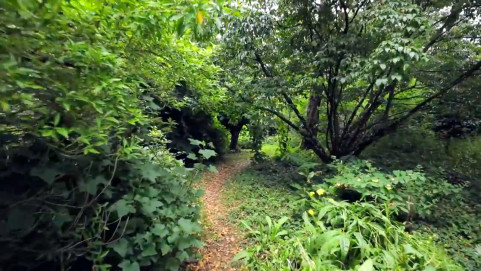](https://www.nationalgeographic.com/video/shorts/1438178883749/) _“You don’t have to know everything to begin”_ <h6 class="breadcrumb"><span class="u-underline">Overview</span> — Definition — Characteristics — Guidelines</h6> ??? * But _where_ do you begin? * Photo still & [Martin Crawford](https://www.agroforestry.co.uk) quote from the short film [A forest garden with 500 edible plants could lead to a sustainable future](https://www.youtube.com/watch?v=Q_m_0UPOzuI) by [Thomas Regnault](https://www.thomasregnault.com) on YouTube --- # Books & websites * [Martin Crawford](https://www.agroforestry.co.uk/): books, courses, plants * [Thomas Regnault’s short film](https://www.youtube.com/watch?v=Q_m_0UPOzuI) of Martin’s garden * [Plants for a Future](http://www.pfaf.org/): massive database of useful plants * [RHS Plant Finder](https://www.rhs.org.uk/Plants/Search-Form) with native filter * [Orange Pippin](https://www.orangepippin.com/apples): super fruit tree reference * [A New Garden Ethic](https://newsociety.com/Books/N/A-New-Garden-Ethic) by [Benjamin Vogt](https://www.monarchgard.com/benjamin-vogt.html) [](https://www.agroforestry.co.uk/product/creating-a-forest-garden-2/) <h6 class="breadcrumb"><span class="u-underline">Overview</span> — Definition — Characteristics — Guidelines</h6> ??? Here are some suggestions on where to begin! * Totally recommend buying [Create a Forest Garden](https://www.agroforestry.co.uk/product/creating-a-forest-garden-2/) by Martin Crawford * Forest gardening encompasses many disciplines, ongoing endeavour by many individuals. --- class: middle, center # 2. Definition <h6 class="breadcrumb">Overview — <span class="u-underline">Definition</span> — Characteristics — Guidelines</h6> --- # 2. Definition 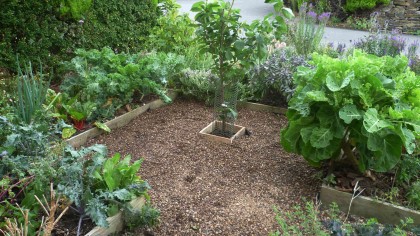 ### “Work with nature<br> to grow edible crops,<br> emulate woodland edge using<br> [perennial](https://en.wikipedia.org/wiki/Perennial_plant) & [ground cover](https://en.wikipedia.org/wiki/Groundcover) plants” <h6 class="breadcrumb">Overview — <span class="u-underline">Definition</span> — Characteristics — Guidelines</h6> ??? * Backyard Forest to emphasise suitability of forest gardening techniques for gardens of all sizes * Most people have yards, not acres > Work with nature to grow edible crops, emulate woodland edge using perennial & ground cover plants ## Key points * Work with nature: sustainable garden, grow natives, create wildlife habitat * Edible crops: productive * Woodland edge: easier to maintain natural balance * Perennial plants: better for wildlife, less work * Ground cover plants: permanent living ground cover --- # Edible ecosystem  ### “Growing edible crops<br> in a wildlife garden” <h6 class="breadcrumb">Overview — <span class="u-underline">Definition</span> — Characteristics — Guidelines</h6> ??? * **Edible ecosystem**—edible crops in a self-sustaining wildlife garden system * Put your garden in a more _natural_ state * Central role of nature Forest garden also known as: * Food forest * Edible landscape * Also look out for edimentals, portmanteau edible+ornamental --- # Why a Backyard Forest? 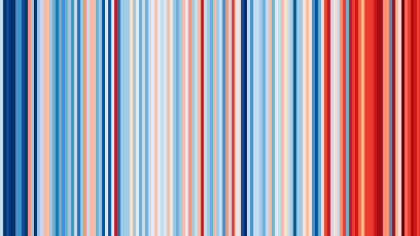 1. ### Climate Emergency 2. ### Ecological Emergency <h6 class="breadcrumb">Overview — <span class="u-underline">Definition</span> — Characteristics — Guidelines</h6> ??? * What we have now isn’t working 😞 * Need to show alternatives * “Once you can grow your own food, you can do anything” — liberating * Life as the measure * [showyourstripes.info](https://showyourstripes.info) — with matching badge! --- # 1. Climate Emergency  <h6 class="breadcrumb">Overview — <span class="u-underline">Definition</span> — Characteristics — Guidelines</h6> ??? * [1.5°C rise by 2026](https://climatenewsnetwork.net/warming-exceed-1-5c-limit-2026/), 6-7°C by 2100 * Photo by Matthew Abbott/The New York Times, labelled for reuse --- # 2. Ecological Emergency 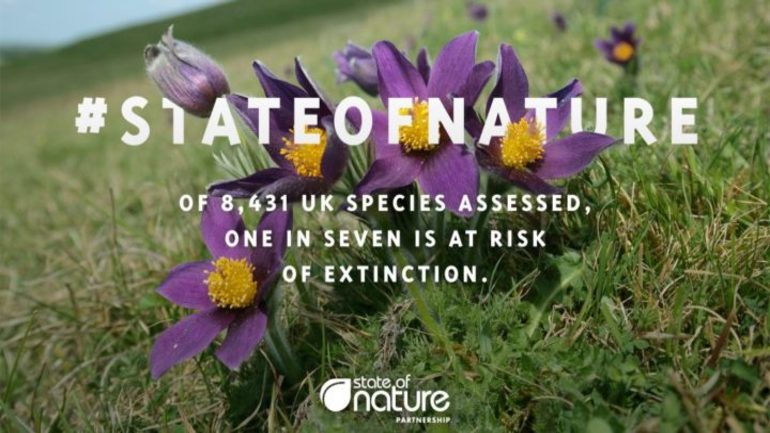 <h6 class="breadcrumb">Overview — <span class="u-underline">Definition</span> — Characteristics — Guidelines</h6> ??? * BBC [Nature crisis: Humans 'threaten 1m species with extinction'](https://www.bbc.co.uk/news/science-environment-48169783) 6 May 2019 * [15% species under threat of extinction in UK](https://www.bto.org/sites/default/files/publications/state-of-nature-2019-summary-report-uk.pdf) --- # What can I do?  1. Stop flying 2. Plant-based diet 3. Activism Forest gardening is activism. <h6 class="breadcrumb">Overview — <span class="u-underline">Definition</span> — Characteristics — Guidelines</h6> ??? ## Plenty other reasons * Low maintenance, for when you get older * Also planting for future generations * Positive activism * Health, both physical & mental * More habitat for wildlife * Sequester carbon * More resilient --- class: middle, center # 3. Characteristics <h6 class="breadcrumb">Overview — Definition — <span class="u-underline">Characteristics</span> — Guidelines</h6> --- class: middle, center # “Nature abhors a garden” <h6 class="breadcrumb">Overview — Definition — <span class="u-underline">Characteristics</span> — Guidelines</h6> --- # 3. Characteristics 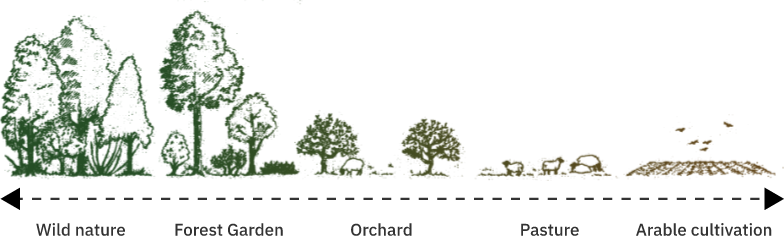 1. Sustainable 2. Productive 3. Wildlife friendly 4. Layers 5. Perennial <h6 class="breadcrumb">Overview — Definition — <span class="u-underline">Characteristics</span> — Guidelines</h6> ??? * Illustration of forest garden in “climax vegetation” * The further right you go, the more energy, less diversity, more fragility * Illustration from Martin Crawford’s Creating a Forest Garden --- # 3. Characteristics 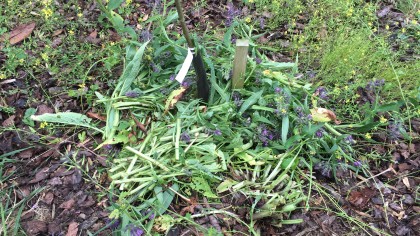 1. Sustainable 👈 2. Productive 3. Wildlife friendly 4. Layers 5. Perennial <h6 class="breadcrumb">Overview — Definition — <span class="u-underline">Characteristics</span> — Guidelines</h6> ??? * Mineral accumulators & nitrogen fixers * Wildlife predators for pests * Permanent “living mulch” ground cover * Trees, perennials & soil biota sequester carbon. * Biodiversity encouraged * Native plants **where possible** * Low maintenance! --- # 3. Characteristics 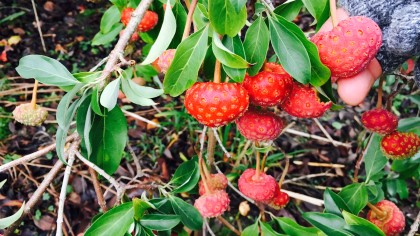 1. Sustainable 2. Productive 👈 3. Wildlife friendly 4. Layers 5. Perennial <h6 class="breadcrumb">Overview — Definition — <span class="u-underline">Characteristics</span> — Guidelines</h6> ??? * Fruit, nuts, leaves, shoots, roots… * Herbs, wood, canes, dyes etc * Multi-layered, using all available space efficiently --- # 3. Characteristics  1. Sustainable 2. Productive 3. Wildlife friendly 👈 4. Layers 5. Perennial <h6 class="breadcrumb">Overview — Definition — <span class="u-underline">Characteristics</span> — Guidelines</h6> ??? * Native plants, as co-evolved * [Wildlife features](https://www.natureworks.org.uk/wildlife-features/) * Create ecosystem, create pest control & nutrients --- # 3. Characteristics  1. Sustainable 2. Productive 3. Wildlife friendly 4. Layers 👈 5. Perennial <h6 class="breadcrumb">Overview — Definition — <span class="u-underline">Characteristics</span> — Guidelines</h6> ??? [Forest garden layers](https://www.natureworks.org.uk/layers/) 1. Canopy 2. Small trees 3. Shrubs 4. Herbaceous perennials 5. Ground cover 6. Climbers 7. Rhizosphere  * Layers are really efficient, in a lazy way! * My logo is 3 basic layers: canopy, shrubs, herbaceous perennials --- # 3. Characteristics  1. Sustainable 2. Productive 3. Wildlife friendly 4. Layers 5. Perennial 👈 <h6 class="breadcrumb">Overview — Definition — <span class="u-underline">Characteristics</span> — Guidelines</h6> ??? Perennial, mostly, plus easy annuals 🙂 * Lower maintenance * Less soil disturbance * More efficient * More nutritious Some annuals, veg like courgettes & squash, and some that self-seed, eg [Marigold](https://pfaf.org/user/Plant.aspx?LatinName=Calendula+officinalis) and [Nasturtium](https://pfaf.org/user/plant.aspx?LatinName=Tropaeolum+majus) --- class: middle, center # 4. Guidelines ??? * Guidelines to bear in mind when designing & creating your Backyard Forest * Things that have really helped me * Here for reference, I will revisit them later on in the course <h6 class="breadcrumb">Overview — Definition — Characteristics — <span class="u-underline">Guidelines</span></h6> --- # 4. Guidelines  1. [Protect](https://www.natureworks.org.uk/protection/) 👈 2. [Spacing](https://www.natureworks.org.uk/spacing/) 3. [Ground cover](https://www.natureworks.org.uk/ground-cover/) 4. [Nutrients](https://www.natureworks.org.uk/nutrients/) <h6 class="breadcrumb">Overview — Definition — Characteristics — <span class="u-underline">Guidelines</span></h6> ??? * Protect from elements & predators * Wind * [Windbreak hedge](/windbreak/) * [Nurse tree](/nurse-tree/) * [Dead hedge](/dead-hedge/) * Wind & cold * Greenhouse * Polytunnel * Cold frames * Potting shed * Heated propagation bed Also protect some young plants from direct sun. --- # 4. Guidelines  1. [Protect](https://www.natureworks.org.uk/protection/) 2. [Spacing](https://www.natureworks.org.uk/spacing/) 👈 3. [Ground cover](https://www.natureworks.org.uk/ground-cover/) 4. [Nutrients](https://www.natureworks.org.uk/nutrients/) <h6 class="breadcrumb">Overview — Definition — Characteristics — <span class="u-underline">Guidelines</span></h6> ??? * Forest garden emulates woodland edge * Need to make sure enough light gets to understorey * **Plant for final size**! * Check [PFAF](https://pfaf.org/user/Default.aspx) & [RHS](https://www.rhs.org.uk/Plants/Search-Form) for sizes * More work to move than to plan! * For cultivated fruit trees, choose right [rootstock](/rootstock/) * Formula: ¼ to ½ average canopy diameters Illustration based on Martin Crawford’s Creating a Forest Garden --- # 4. Guidelines  1. [Protect](https://www.natureworks.org.uk/protection/) 2. [Spacing](https://www.natureworks.org.uk/spacing/) 4. [Ground cover](https://www.natureworks.org.uk/ground-cover/) 👈 5. [Nutrients](https://www.natureworks.org.uk/nutrients/) <h6 class="breadcrumb">Overview — Definition — Characteristics — <span class="u-underline">Guidelines</span></h6> ??? * **Always** keep the ground covered * Annuals, use a mulch. Forest garden, use ground cover plants * When establishing, use bark or wood chip, plus temporary ground cover * Wood chip mulch [does not rob nitrogen](https://puyallup.wsu.edu/wp-content/uploads/sites/403/2015/03/wood-chips.pdf) (PDF)! * I prefer bark but wood chip more available * Best temporary ground cover in West Wales, [White Mustard](https://pfaf.org/user/plant.aspx?LatinName=Sinapis+alba)—buy bulk --- # 4. Guidelines  1. [Protect](https://www.natureworks.org.uk/protection/) 2. [Spacing](https://www.natureworks.org.uk/spacing/) 4. [Ground cover](https://www.natureworks.org.uk/ground-cover/) 5. [Nutrients](https://www.natureworks.org.uk/nutrients/) 👈 <h6 class="breadcrumb">Overview — Definition — Characteristics — <span class="u-underline">Guidelines</span></h6> ??? * Calculate **[nutrient budget](https://www.natureworks.org.uk/nutrients/)**, Creating a Forest Garden Ch.6 * Have soil test for nutrients & pH, local farmers co-op * Make sure to have enough “system plants” providing nutrients * NPK — Nitrogen, Phosphorous, Potassium * Nitrogen: alder, pea family, Sea Buckthorn, Autumn Olive * Potassium: [comfrey](/comfrey/) * Phosphorous: not really provided by plants * ['Bocking 14'](https://www.organiccatalogue.com/products/comfrey-bocking-14-plants_mh6390), sterile, bred for nutrients * [Dwarf Comfrey](https://www.rhs.org.uk/Plants/75444/Symphytum-ibericum/Details), good thick ground cover --- # Backyard Forest takeaways  * Edible ecosystem * Sustainable * Take your time <h6 class="breadcrumb">Overview — Definition — Characteristics — Guidelines</h6> --- class: middle, center # The End  <hello@natureworks.org.uk> [natureworks.org.uk/newsletter](https://www.natureworks.org.uk/newsletter) Music: _[Chegsticks](https://iamthemightyjungulator.bandcamp.com/track/chegsticks-3) by [I Am The Mighty Jungulator](https://iamthemightyjungulator.bandcamp.com)_