+ - 0:00:00
Notes for current slide

This work is licensed under a Creative Commons Attribution 4.0 International License, embedded work may have other licenses.

Notes for next slide

1. Survey

Introduction, survey & wishlists
natureworks.org.uk/talks/wildlifetrust
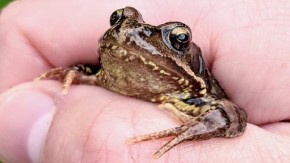
Young frog in a hand

1. Survey 👀
2. Design 🦄
3. Canopy 🌳

Press P to see notes and credits
1 / 25

This work is licensed under a Creative Commons Attribution 4.0 International License, embedded work may have other licenses.

Outline

  1. Intro
  2. Survey
  3. Wishlist
2 / 25

Remember…

Plan, Canopy, Cultivate

3 / 25

1. Intro

4 / 25

Climate Emergency

kangaroo rushes past a burning house in Lake Conjola, Australia, on Tuesday, Dec. 31 2019

5 / 25

3.5°C by 2050

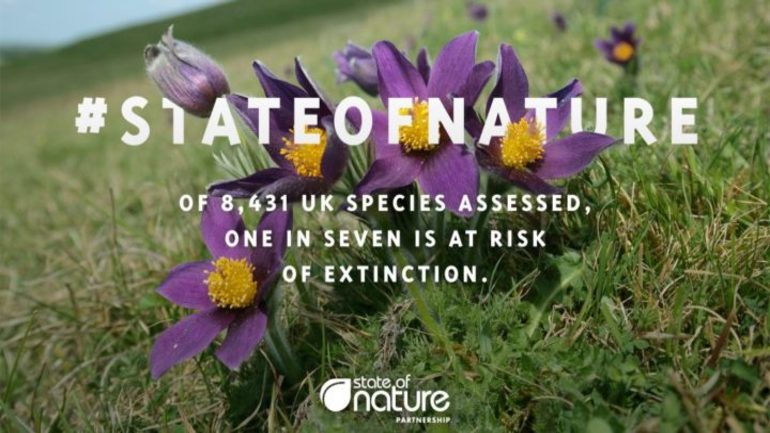
Ecological Emergency

Cover of State of Nature UK report

6 / 25

Forest garden definition

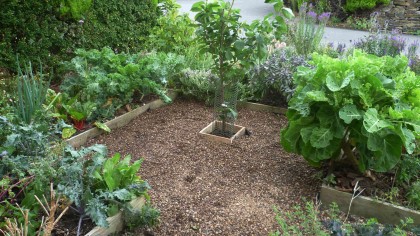
Small edible forest garden, wooden planks and woodchip paths

“Work with nature
  to grow edible crops,
  emulate woodland edge using
  perennial & ground cover plants”

8 / 25
  • Most people have yards, not acres

Work with nature to grow edible crops, emulate woodland edge using perennial & ground cover plants

Key points

  • Work with nature: sustainable garden, grow natives, create wildlife habitat
  • Edible crops: productive
  • Woodland edge: easier to maintain natural balance
  • Perennial plants: better for wildlife, less work
  • Ground cover plants: permanent living ground cover

Edible ecosystem

Bumblebee on pinkish flower of sedum (Hylotelephium spectabile)

“Grow edible crops
  in a wildlife garden”
9 / 25

Characteristics

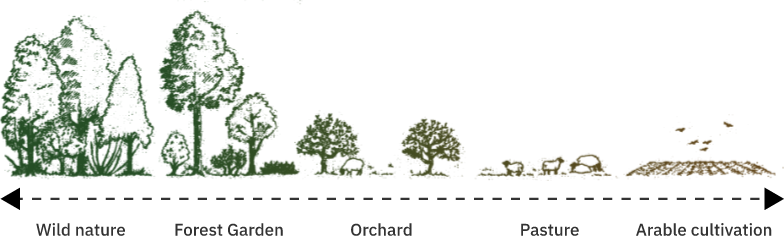
Illustration of climax vegetations & position of forest garden by wild wood

  1. Sustainable
  2. Productive
  3. Wildlife friendly
  4. Layers
  5. Perennial
11 / 25
  1. Sustainable
    • Mineral accumulators & nitrogen fixers
    • Wildlife predators for pests
    • Permanent “living mulch” ground cover
    • Trees, perennials & soil biota sequester carbon.
    • Biodiversity encouraged
    • Native plants where possible
    • Low maintenance!
  2. Productive
    • Fruit, nuts, leaves, shoots, roots…
    • Herbs, wood, canes, dyes etc
    • Multi-layered, using all available space efficiently
  3. Wildlife friendly
    • Native plants, as co-evolved
    • Create ecosystem: grow insects, grow pest control, grow nutrients
  4. Layers
    1. Canopy
    2. Small trees
    3. Shrubs
    4. Herbaceous perennials
    5. Ground cover
    6. Climbers
    7. Rhizosphere
  5. Perennial
    • Lower maintenance
    • Less soil disturbance
    • More efficient
    • More nutritious

Illustration used with permission from Martin Crawford’s Creating a Forest Garden

  1. Protect
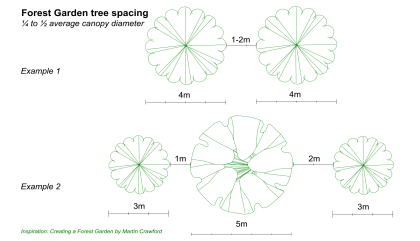
  2. Spacing
  3. Ground cover
    • Always keep the ground covered
    • Annuals, use a mulch. Forest garden, use ground cover plants
    • When establishing, use bark or wood chip, plus temporary ground cover
    • Wood chip mulch does not rob nitrogen (PDF)!
    • Best temporary ground cover in West Wales, White Mustard—buy bulk
  4. Nutrients
    • Calculate nutrient budget, Creating a Forest Garden Ch.6
    • Have soil test for nutrients & pH, local farmers co-op
    • “System plants” providing nutrients
    • Nitrogen: alder, pea family, Sea Buckthorn, Autumn Olive
    • Potassium: natureworks.org.uk/comfrey

2. Survey

13 / 25

Map

Boundary of property on paper plan

  • Work out your scale!
  • 1:50 means 1m = 2cm
14 / 25
  • 5mm squared A3 paper

Observations

Clouds over sunny wooded valley

  1. Position
  2. Elements
  3. Features
  4. Situation

Checklist PDF

15 / 25
  1. Position: the aspect, the orientation, elevation, slope
  2. Elements: water, wind, sun, earth
  3. Features: existing habitat, utilities, structures, access
  4. Situation: neighbours, privacy, noise, smell

Mark observations on plan.

1. Position

Screenshot iPhone compass app

  • Orientation
  • Elevation
  • Slope
16 / 25
  • Orientation, standard compass on iPhone
  • Elevation, GPS coordinates website map, screenshot
  • Ordnance survey map gives you an idea of contour lines, try Bing.com/maps
  • Slope important for creating swales, which are more important for dry areas
  • You can survey more accurate contour lines using a bunyip & 2 people

2. Elements

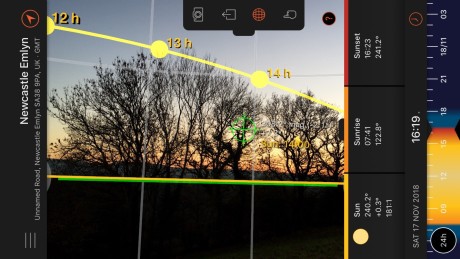
Screenshot of Sun Surveyor app

  • Water
  • Earth
  • Wind
  • Sun
  • Climate
17 / 25
  • Water - running water, springs, surface water, drainage.
  • Water - watch what happens when it rains
  • Geology - local farmers, archeology. And, dig!
  • Soil type: clay, sand, loam
  • Soil pH test. ph 7 is neutral, lower is more acid
  • Soil nutrients: ask local farmers co-op for nutrients NPK test
  • Wind map from Meteoblue
  • Met Office Weather Observations
  • Sun Surveyor app

3. Features

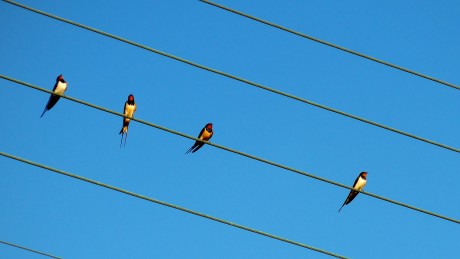
Swallows on telephone wire

  • Wildlife
  • Utilities
  • Structures
  • Access
18 / 25
  • Electricity
  • Telephone lines
  • Drains
  • Water - old photo of drains being dug in forest garden
  • Gas pipes

4. Situation

3D satellite view of urban
street

  • Privacy
  • Noise
  • Pollution
19 / 25

Situation in the landscape

  • Pollution
    • Air pollution from traffic
    • Run-off from road (water & salt)
    • Run-off from fields (slurry)
    • Rubbish from public footpath

3. Wishlist

20 / 25

Features wishlist

New wildlife pond

  • Wildlife
  • Water
  • Nutrients
  • Seating
  • Structures
21 / 25
  • “Coffee & cocktails” — where to drink them, morning & evening

Survey exercise

Checklist

  • In groups of 3, choose an area from the EcoPark plan.
  • From memory, fill in the observations and features wishlist part of the checklist for your area of the EcoPark
23 / 25

Takeaways

  • Create edible ecosystems
  • Plan, Canopy, Cultivate
24 / 25

Outline

  1. Intro
  2. Survey
  3. Wishlist
2 / 25
Paused

Help

Keyboard shortcuts

↑, ←, Pg Up, k Go to previous slide
↓, →, Pg Dn, Space, j Go to next slide
Home Go to first slide
End Go to last slide
Number + Return Go to specific slide
b / m / f Toggle blackout / mirrored / fullscreen mode
c Clone slideshow
p Toggle presenter mode
t Restart the presentation timer
?, h Toggle this help
Esc Back to slideshow